
Sometimes. A dentist may be able to place a final crown at the same visit as a root canal if the treatment is complete and the tooth is ready to restore. In other cases, the tooth needs another appointment to finish the root canal or place the final restoration.
Nixa Dental offers root canal treatment and same-day crowns in Nixa, Missouri. If you’re trying to plan time away from work, school, or family commitments, ask whether “same-day” means both procedures at one appointment or a separate visit where the crown is made and placed that day.
Why Might a Tooth Need a Crown After a Root Canal?
A root canal treats the inside of the tooth. The dentist removes inflamed or infected tissue, cleans the canals, and seals them. The next step is to restore the outside of the tooth. If decay, a crack, or an old filling has left the tooth weak, a crown can cover and protect it while you chew.
Back teeth, such as molars and premolars, often need crowns because they do much of the work of chewing. A front tooth with enough healthy structure may be suitable for a bonded filling instead. Your dentist looks at where the tooth sits, what caused the damage, and how much healthy tooth remains before recommending a restoration.
What Determines Whether Both Procedures Can Happen in One Visit?
Is the root canal complete?
Some root canals can be finished in one appointment. Others require a return visit. If the dentist needs to continue treating the canals, a temporary filling may be used to close the opening between visits. The final restoration can be placed once the root canal is complete and the tooth is ready.
Is there enough healthy tooth to support the crown?
A crown needs a stable foundation. If a large part of the tooth is missing, the dentist may need to rebuild part of it with filling material before preparing it for a crown. This is called a buildup. Sometimes it can be done at the same visit. The extent of the damage and any concerns about a crack can change the plan.
Sometimes the dentist can only see how much solid tooth is left after removing an old filling or clearing away decay. If the dentist finds more damage than expected, the original plan may change. Ask what the finding means for the tooth and whether it changes the type of restoration you need or just when it can be placed.
Is a same-day ceramic crown suitable for this tooth?
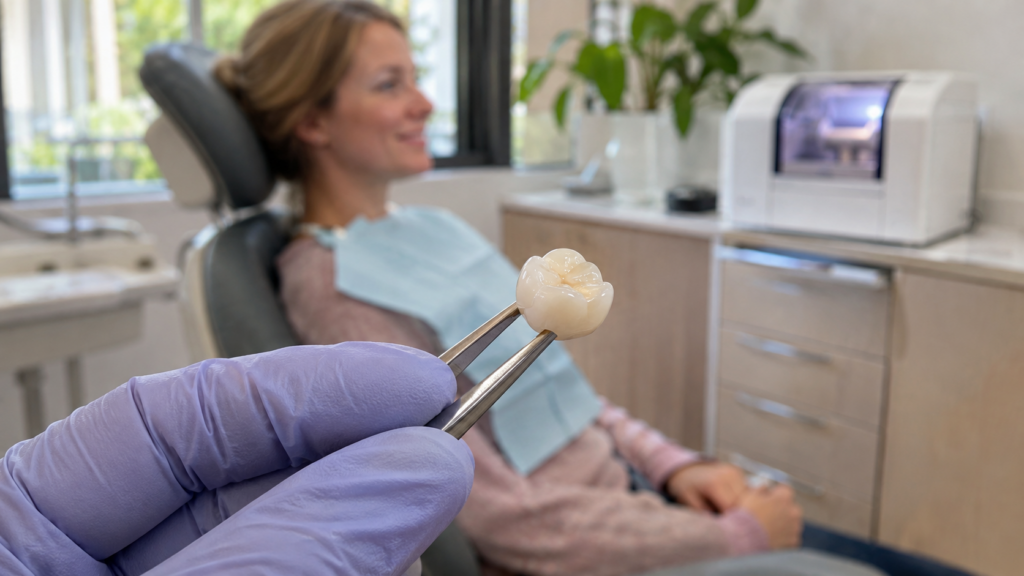
Nixa Dental uses same-day CEREC® crowns for suitable cases. The dentist scans the prepared tooth, designs the crown from the scan, and uses an in-office milling machine to make it. Before placing it, the dentist checks the fit and how it feels when you bite. This process can shorten the crown portion of treatment. The condition of the tooth and the type of crown you need still determine whether both procedures can happen together.
What Happens If You Need a Separate Crown Appointment?
The dentist may place a temporary filling to seal the tooth after root canal treatment. If the tooth has already been shaped for a crown, you may get a temporary crown while you wait for the final one. Ask which temporary restoration you have and when the dentist wants you to return.
A temporary filling covers the opening used to reach the canals. A temporary crown covers the tooth after it has been shaped. Neither tells you on its own whether the root canal is finished. Before you leave, ask whether the next visit is to finish the root canal, prepare the tooth, or place the final crown.
A separate crown appointment can still be a same-day crown visit. If the tooth is ready and a CEREC® crown is appropriate, the dentist may be able to prepare the tooth, make the crown, and place it at that later appointment. For example, if a root canal is completed on Monday, a patient might return another day and have the crown made and placed in that single crown visit.
Book the next visit within the timeframe your dentist recommends. A tooth that feels better after a root canal may still be vulnerable to fracture or need a final restoration to seal it.
How Should You Care for the Tooth?
If the final restoration is still pending: Avoid chewing or biting on the treated tooth until it’s restored or your dentist says you can use it. If a temporary filling or crown comes out, call the dental office for instructions. Contact the office promptly if you notice visible swelling, severe or worsening pain, or a bite that feels uneven.
If the final crown is in place: Follow your dentist’s instructions on when to eat and what to avoid. Wait for any numbness to wear off before chewing. Once you’re back to your normal routine, brush and clean between your teeth as directed. Regular dental exams and cleanings give the dental team a chance to check the crown and the gum around it.
What Should You Ask Before Your Visit?
If you’re coordinating dental care with work or family plans, these questions can help you set aside the right amount of time:
- Is this visit for the root canal, the crown, or both? Ask whether the dentist expects to finish the root canal in one appointment and whether there’s time to place the crown if the tooth is ready.
- If I need a second visit, when should I book it? Ask what will protect the tooth in the meantime and whether you should schedule the next appointment before leaving.
- Who will place the final crown? If another dental office is doing the root canal, ask when to contact the dentist who will restore the tooth and whether the offices need to share records.
- How long should I set aside? Ask for a time estimate based on your treatment plan, especially if you’re arranging transportation or childcare.
If the root canal has already been done elsewhere, tell the scheduling team when it was completed and whether you’re still wearing a temporary crown or have a temporary filling. Ask whether to bring records or have the other office send them ahead. That gives the dental team a clearer idea of whether to schedule an exam first or set aside time for the crown.
Common Questions About Crown Timing
Can I get a same-day crown if I already had a root canal?
Possibly. A dentist can examine the tooth and any existing restoration to see whether a crown is needed and whether it can be made and placed in one visit. If you still have a temporary filling after recent treatment, call to confirm when your dentist wants to see you.
Is a same-day CEREC® crown temporary?
A same-day CEREC® crown is designed as the final restoration. “Same-day” describes how quickly it’s made and placed. Like any crown, it needs regular care and may eventually need repair or replacement.
Can the final crown be adjusted after it’s placed?
If the crown feels like it touches first when you bite down, call the dental office. The dentist can check how your teeth meet and decide whether the crown needs an adjustment. If you also have pain or swelling, mention that when you call.
Will my tooth be numb again at a separate crown visit?
Your dentist may use local anesthesia for crown preparation, depending on the tooth and the work needed. If you’re worried about discomfort, ask what to expect when you schedule the visit so you can plan your day around it.
Ask Nixa Dental About Your Crown Timing
If you’ve been told you need a root canal or recently had one, schedule a visit with Nixa Dental. The team can evaluate the tooth, explain which restoration may be appropriate, and help you plan when to have it placed.