
A same-day dental bridge may be an option when the supporting teeth and gums are ready for treatment and the planned restoration can be fabricated in the office. The number and location of missing teeth, the bridge material, and your bite all influence that decision.
Nixa Dental offers same-day bridges for selected cases. The important first question is whether a bridge suits your needs. Once that is established, your dentist can explain whether its preparation, fabrication, and placement can happen during one restorative appointment.
Understanding those steps can help you plan your care without assuming that every missing tooth can be replaced immediately.
What Is a Same-Day Dental Bridge?
A dental bridge replaces one or more missing teeth. This article focuses on a tooth-supported fixed bridge, which uses neighboring teeth to hold the replacement in place.
A common design has a crown on each side of a gap, joined to an artificial tooth called a pontic. The pontic fills the missing tooth space. The bridge stays in your mouth and is not removed for daily cleaning.
The supporting teeth generally need to be reshaped so the crowns can fit over them. That preparation is an important part of the decision, especially if the neighboring teeth are otherwise healthy.
“Same-day” describes how an appropriate bridge is made and placed. It does not change the need for sound supporting teeth, careful planning, or daily care.
Which Cases May Be Suitable at Nixa Dental?
Nixa Dental’s bridge page describes different approaches based on the missing tooth’s location and the restoration required:
| Situation described by the practice | Potential fabrication approach |
| One missing tooth behind the smile zone | A zirconia bridge may be made in the office in one appointment. |
| A missing front tooth | A porcelain bridge may be made in the office in one appointment. |
| Multiple missing back teeth requiring a metal-supported design | A porcelain-fused-to-metal bridge may be scanned in the office and made by a laboratory. |
These examples help explain why two patients with missing teeth may receive different recommendations. They are not automatic eligibility rules.
The practice can confirm which material and design suit your mouth. The condition of the supporting teeth, available space, and chewing forces still matter.
A laboratory-made bridge can be the appropriate choice when the case calls for it. A longer fabrication process does not, by itself, make that option less suitable.
What Does Your Dentist Evaluate First?
Before discussing the appointment schedule, your dentist needs to determine whether a bridge has a suitable foundation.
The Supporting Teeth
The teeth beside the gap must be evaluated for decay, cracks, existing fillings or crowns, and remaining structure. Their position and stability also affect whether they can support the planned bridge.
A tooth that needs treatment first may change the sequence. Your dentist should explain what needs to happen before bridge preparation and why.
Ask how much tooth preparation is expected and whether the condition of the neighboring teeth makes a bridge a reasonable option.
The Gums and Supporting Bone
The tissues around the supporting teeth matter as much as the teeth themselves. Gum inflammation, loss of support, or an area that is still healing may need attention before a final restoration.
If a tooth was recently removed, the dentist must also consider tissue healing. Being able to fabricate a bridge in the office does not remove that consideration.
The Gap, Bite, and Bridge Design
Replacing one tooth is different from replacing several consecutive teeth. The size of the gap, its location, the available room for the restoration, and the way your teeth meet influence planning.
Tell your dentist if you grind or clench, have discomfort when biting, or have experienced problems with previous dental work. These details may affect the design and material discussion.
How Does Digital Technology Help?
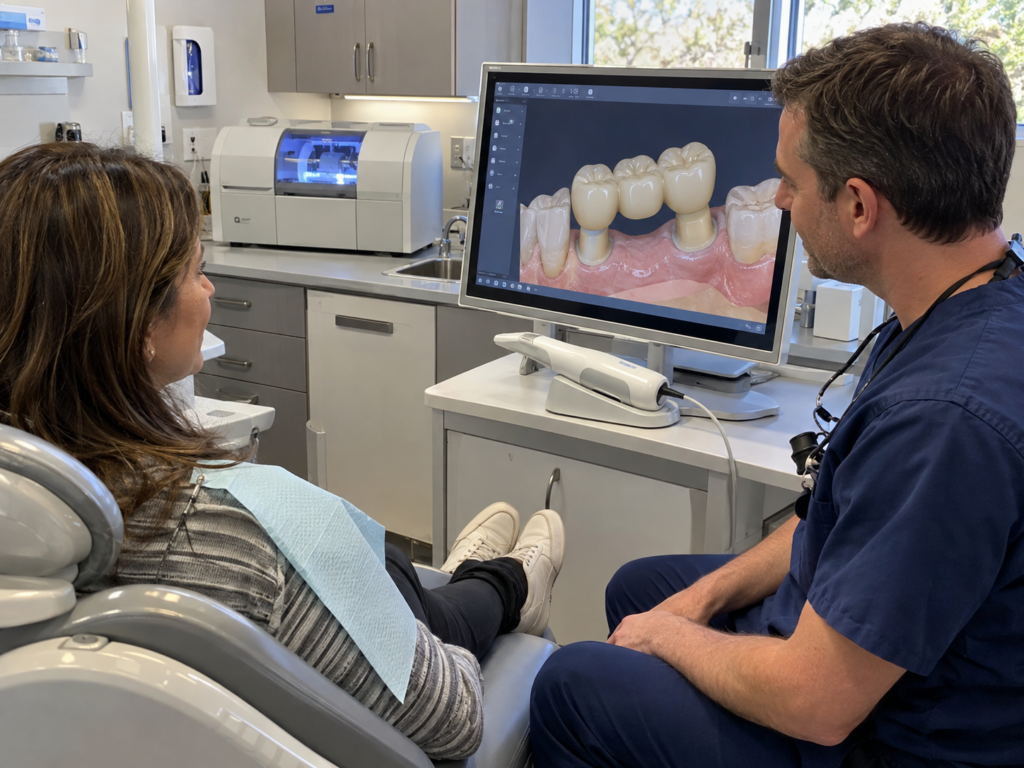
Digital scanning records the prepared teeth and the surrounding bite. Those records can support computer-aided design of the bridge, followed by fabrication using an appropriate material and workflow.
However, a digital scan does not necessarily mean the bridge will be made that day. Nixa also describes scanning certain bridges before sending the records to a laboratory.
The distinction is where and how the restoration is produced, not simply whether a scanner is used.
Nixa Dental also offers same-day CEREC® crowns. A crown restores an existing tooth, while a bridge includes a replacement for a missing tooth. Ask which technology and fabrication process are planned for your particular bridge.
Does Same-Day Mean the Entire Treatment Takes One Visit?
It may describe the appointment when the bridge is prepared, fabricated, checked, and placed. Earlier appointments can still be needed for evaluation or other care.
For example, a patient may first need treatment for decay, an assessment of a questionable supporting tooth, or time for an extraction site to heal. Those steps belong to the overall plan even if the final bridge is made in one appointment.
Follow-up visits may also be recommended to assess comfort, bite, and maintenance.
Ask your dental team to distinguish the restorative appointment from the complete treatment timeline. This makes scheduling expectations clearer.
What Happens During the Restorative Appointment?
The precise sequence depends on your case, but the main stages generally include:
- Preparation: The dentist prepares the supporting teeth for the planned bridge, with appropriate comfort measures.
- Digital records: Scans capture the prepared teeth and information about how your teeth meet.
- Design and fabrication: The restoration is designed and produced through the selected in-office process when suitable.
- Clinical checks: The dentist evaluates its seating, margins, contacts with neighboring teeth, and bite.
- Placement and instructions: After the necessary checks and adjustments, the bridge is secured and care instructions are reviewed.
Fabrication is only part of the appointment. A restoration that has been made still needs to be evaluated before final placement.
Ask how much time to reserve and whether your treatment plan includes additional visits. Your dental team can give you an estimate based on the planned restoration.
What If a Laboratory-Made Bridge Is Recommended?
A laboratory workflow may involve preparing the supporting teeth, taking impressions or scans, and using a temporary bridge while the final restoration is made.
The permanent bridge is then checked and placed at a later appointment.
If this approach is recommended, ask why the design or material calls for laboratory fabrication. Also ask how to care for the temporary restoration and what to do if it loosens.
The useful comparison is which process fits your mouth and treatment goals. Convenience matters, but it is one consideration among several.
Should You Compare a Bridge With Other Options?
A bridge should be considered alongside appropriate alternatives. Depending on your findings, these may include an implant-supported restoration or a removable partial denture.
A tooth-supported bridge involves preparation of neighboring teeth. An implant-supported restoration has surgical and healing considerations. A removable partial denture has different support and daily-care requirements.
You do not need to choose based on speed alone. Ask how the options compare for your remaining teeth, oral health, maintenance needs, and goals.
Keep this discussion individualized, particularly if preserving healthy neighboring tooth structure is a priority.
How Do You Care for the Finished Bridge?
Daily cleaning includes the supporting teeth and the area beneath the pontic. Your dental team can demonstrate how to use a floss threader or another suitable cleaning aid.
Brush with fluoride toothpaste and attend the checkups recommended for you. A bridge does not make its supporting teeth immune to decay or gum problems.
Follow the team’s guidance about eating after placement. Contact the office if the bridge feels loose, your bite feels uneven, or discomfort persists.
Frequently Asked Questions
Can every dental bridge be made in one day?
No. In-office fabrication depends on the planned design, material, supporting teeth, and readiness of the surrounding tissues.
Can I get a same-day bridge immediately after an extraction?
Not automatically. Your dentist needs to assess the extraction site and healing requirements before deciding when a final bridge is appropriate.
Will I need a temporary bridge?
A temporary bridge may be needed when the final restoration is made by a laboratory or treatment is completed in stages. Your team can explain your plan.
Does a same-day bridge require follow-up care?
Yes. Daily cleaning and recommended dental reviews remain important, even when the restoration is made and placed during one appointment.
How do I find out whether I am a candidate?
An examination is needed to assess the gap, supporting teeth, gums, bite, and restoration requirements. The team can then explain your options and expected sequence.
Explore Your Bridge Options With Nixa Dental
At Nixa Dental in Nixa, Missouri, we listen to your concerns and explain restorative options around your individual needs. That includes discussing whether a bridge is appropriate and which fabrication approach fits the planned restoration.
If you are considering replacing a missing tooth, schedule an appointment to discuss your bridge options and what to expect from treatment.